
Victoria FallsTravel Guide
Mosi-oa-Tunya — 'the smoke that thunders' — crashes along the Zambezi on Zambia's southern border, with the safari town of Livingstone serving as its lively, surprisingly delicious base.
Is Victoria Falls right for you?
May to August, when the falls are full and the weather mild
Around 33°C by day in October, 25°C in July — recorded at the local weather station.
It depends where you stand. There is a cheap version and an expensive one — the guides below say which is which.
We publish a multi-day route for this one.
May to August, when the falls are full and the weather mild
Average daily highs, recorded at Victoria Falls town (Zimbabwe bank), 1961-1990 normals.
Where this comes from
World Meteorological Organization (en.wikipedia "Victoria Falls, Zimbabwe" weather box) — No weather box exists for the Zambian side (Livingstone district); used the Victoria Falls town station directly across the gorge, same microclimate.
Mixed
Typical cost profile for visitors
Nothing else we cover is within a comfortable hop — this one is a trip of its own.
Finding Victoria Falls
Reading Victoria Falls

What to Eat at Victoria Falls: A Zambezi Food Guide
Nshima and river bream, peanut-buttered greens, and high tea above the gorge — eating well on the Zambian side of the world's greatest waterfall.

Let the Zambezi Set the Running Order: Four Days on the Zambian Bank of Victoria Falls
The Zambian bank is worth four days, but the river's water level decides what order they go in, which days swap, and what is simply closed when you arrive.

When to See Victoria Falls: An Honest Month-by-Month Guide
The world's most famous curtain of water is two different spectacles depending on the month. Here is what the Zambezi actually does across the year — and how to pick your moment.

Market Tastes on the Zambezi: Eating Like a Local Around Victoria Falls
Away from the lodge buffets, the towns beside the falls eat vividly and seasonally — river fish, maize-meal comfort food and rainy-season delicacies. Here is what to try, and when.

The Quiet Seasons of Victoria Falls: When Insiders Choose to Go
The dry-season consensus has Victoria Falls backwards: from the Zambian side, the months most travellers are told to avoid are the ones that open the gorge, the island and the wildest water on the Zambezi.
Victoria Falls, framed


What we'd do in Victoria Falls
See and do
- The moonlight show
At full moon, when spray and sky cooperate, the falls produce a lunar rainbow — a ghostly nighttime arc in the mist.
Read: The Quiet Seasons of Victoria Falls: When Insiders Choose to Go - The honest caveats
October can be punishing before the rains break, with Livingstone highs climbing toward 40C and shade in short supply on the viewpoint trails; plan for early mornings and write off the middle of the day.
Read: The Quiet Seasons of Victoria Falls: When Insiders Choose to Go
Eat and drink
- Ifisashi and the Peanut Tradition
Zambia's great vegetable dish is ifisashi: leafy greens such as pumpkin leaves or rape simmered in a rich ground-peanut sauce.
Read: What to Eat at Victoria Falls: A Zambezi Food Guide - Fish from the Zambezi
Bream is the river's pride — usually served whole, grilled or fried, with nshima and greens.
Read: Market Tastes on the Zambezi: Eating Like a Local Around Victoria Falls - The Braai and the Boma Night
Southern Africa's barbecue culture is alive here.
Read: What to Eat at Victoria Falls: A Zambezi Food Guide - Rainy-season delicacies
Visit between roughly November and March and you may encounter the region's famous seasonal foods: mopane worms — protein-rich caterpillars, dried or fried, an acquired but genuinely traditional taste — along with wild mushrooms and fresh green maize roasted over coals.
Read: Market Tastes on the Zambezi: Eating Like a Local Around Victoria Falls
Practical essentials for Zambia
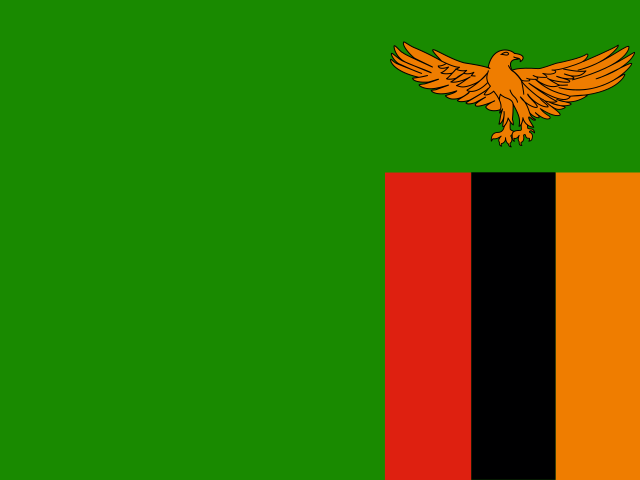 Practical essentials for Zambia
Zambian kwacha (ZMW)
English is the official language, alongside Bemba, Nyanja, Tonga and others
Type C/D/G, 230V 50Hz
There is no public network aimed at visitors — around Livingstone and Victoria Falls it is lodge transfers, taxis with the fare agreed in advance, and shared minibuses.
About 10% in restaurants and lodges where no service charge is added; safari guides and trackers are tipped separately at the end of a stay.
Tap water is not recommended for drinking; use bottled or filtered water.
Left-hand side; a national licence covers visits of up to 90 days, after which an International Driving Permit or a Zambian licence is required.
999 (police), 993 (fire), 992 (ambulance); 112 works from a mobile
Country-level guidance, checked against official sources. Currency, fares and entry rules change — confirm anything time-critical before you travel.

 South Africa
 Rwanda

 Tanzania
 Kenya
Kenya
 Mauritius
 Seychelles
 Ghana
Ghana
 Egypt
Egypt

 Senegal
 Tunisia