
Ghana
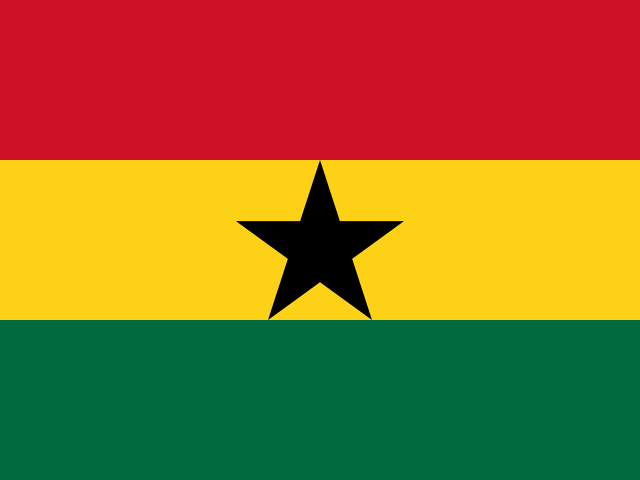 Ghana
Ghana5 guides across 1 destination — where to go, when, what it costs and what to eat.
Destinations in Ghana
Practical essentials for Ghana
Ghanaian cedi (GHS)
English is the official language and is spoken fluently nationwide; Akan (Twi) is the most widely spoken indigenous language
Type G, with older Type D sockets still around, 230V 50Hz
Shared tro-tro minibuses and unmetered taxis cover Accra, but ride-hailing apps - Uber, Bolt, Yango and inDrive - are the practical choice for a visitor.
Not safe from the tap; drink sealed bottled water.
Right-hand side; the 1949 International Driving Permit is required alongside your national licence.
112 (general), 191 (police), 193 (ambulance), 192 (fire)
Country-level guidance, checked against official sources. Currency, fares and entry rules change — confirm anything time-critical before you travel.
Recent stories from Ghana

Nine Things in Accra Worth the Traffic, in Order
Three days in Accra realistically buys you six things, not fifteen, so here are the nine that repay the hours they cost, ranked and argued from the Jamestown fishing harbour to the castles three hours west.

Breakfast to Midnight: Eating Your Way Through Accra
Waakye at dawn, jollof at noon, kelewele at dusk and grilled tilapia under the stars — a full day of eating in Ghana's capital, dish by dish.

Book the Traffic, Not the Room: Where to Sleep in Accra
Accra is a compact city that drives like a sprawling one, so the district you book matters far more than the room inside it — here is the sleeping map from Osu to the airport, at three budgets.

The Backstreets and Local Markets of Accra
Beyond the monuments: the secondhand-clothing labyrinth, the herbal medicine stalls, Jamestown's boxing gyms and the workshops where coffins are carved into fish and aeroplanes.

48 Hours in Accra, Hour by Hour
Two days through Ghana's capital: Nkrumah's mausoleum, Jamestown's fishing shore, Makola's beautiful chaos, and the best jollof of your life.