
Tunisia
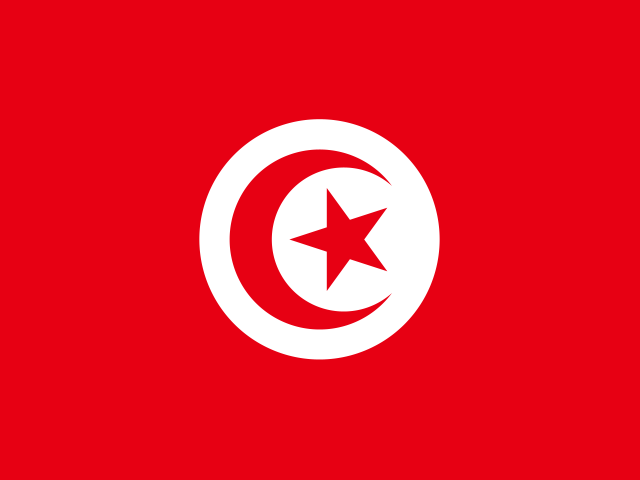 Tunisia
4 guides across 1 destination — where to go, when, what it costs and what to eat.
Destinations in Tunisia
Practical essentials for Tunisia
Tunisian dinar (TND) — a closed currency that cannot be bought or sold outside the country
Arabic is official and French is used widely in business and on signage; English is limited outside tourist hotels
Type C/E, 230V 50Hz
Shared louage taxis and metered city taxis do most of the work; in Tunis the Métro Léger and the TGM line out to Carthage and Sidi Bou Saïd cost about one dinar.
Not obligatory — 5–10% in a restaurant and a few dinars for a guide or driver is the usual gesture.
Tap water is chlorinated and generally safe in cities, but it tastes poor and locals and visitors alike drink bottled.
Right-hand side; a 1968 International Driving Permit is required with your national licence, valid for up to a year.
197 police, 190 ambulance, 198 fire
Country-level guidance, checked against official sources. Currency, fares and entry rules change — confirm anything time-critical before you travel.
Recent stories from Tunisia

Tunis in Three Days, Ordered Around the Two Days the Souks Are Shut
Tunis is a three-day city, but the medina closes on Fridays and Sundays and the Bardo closes on Mondays, so the order of your days matters far more here than the list of sights.

Tunis, Ranked: The 7 Unmissable Experiences in Tunisia's Capital
Carthage at your feet, a living medieval medina, world-beating Roman mosaics and the bluest village on the Mediterranean — in the right order.

Tunis for Culture Lovers: Mosaics, the Medina and the Ghosts of Carthage
Few capitals layer Phoenician, Roman, Arab and French history so densely. From the Bardo's Roman mosaics to the blue lanes of Sidi Bou Said, the cultural best of Tunis, ranked.

Tunis Off-Season: Why Its Quietest Months Are Its Best
When the beach crowds leave, Tunis becomes a different city — mild, cheap and gloriously unhurried. The case for visiting between late autumn and early spring.